Humayun’s Tomb : Photo Essay

DSC_0099

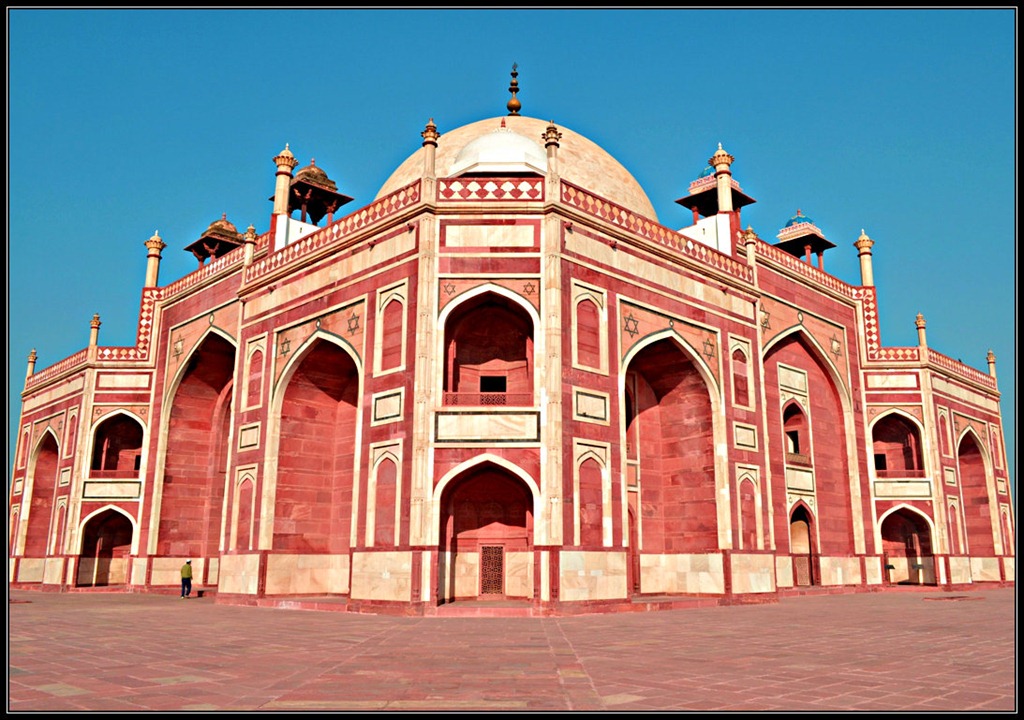
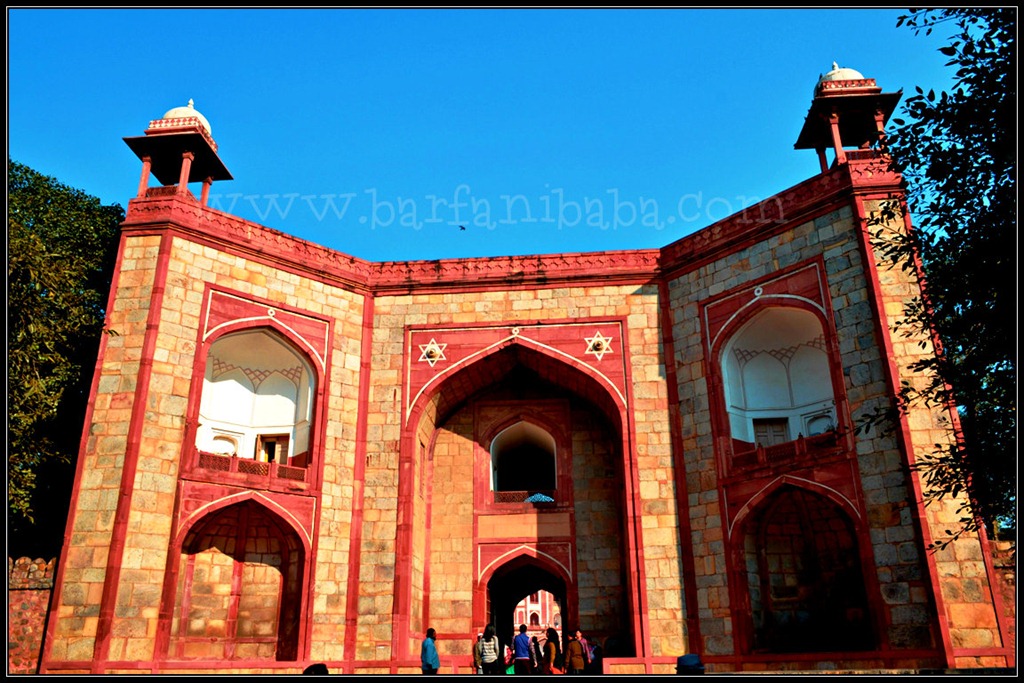
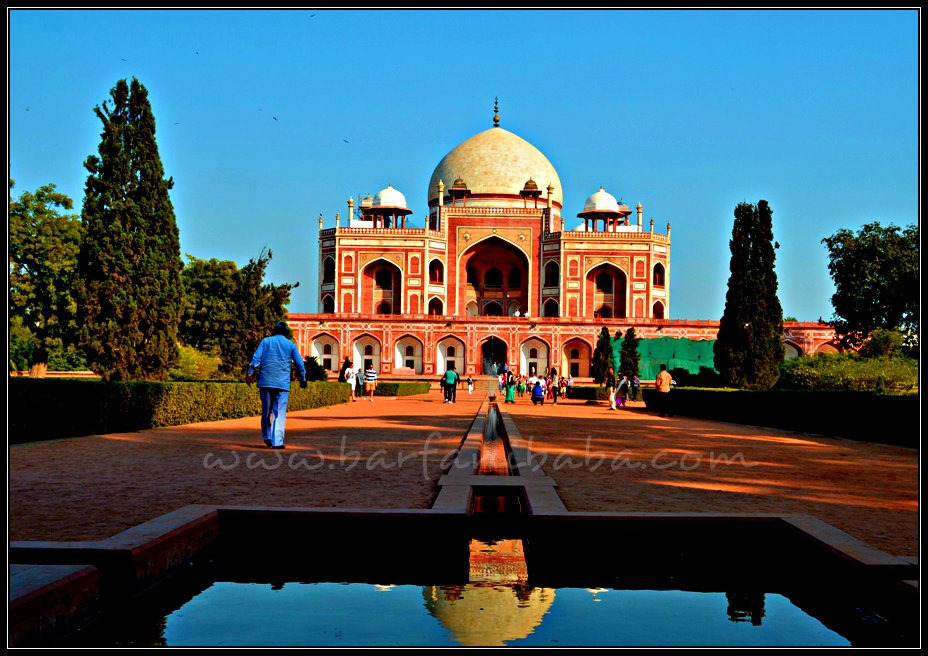
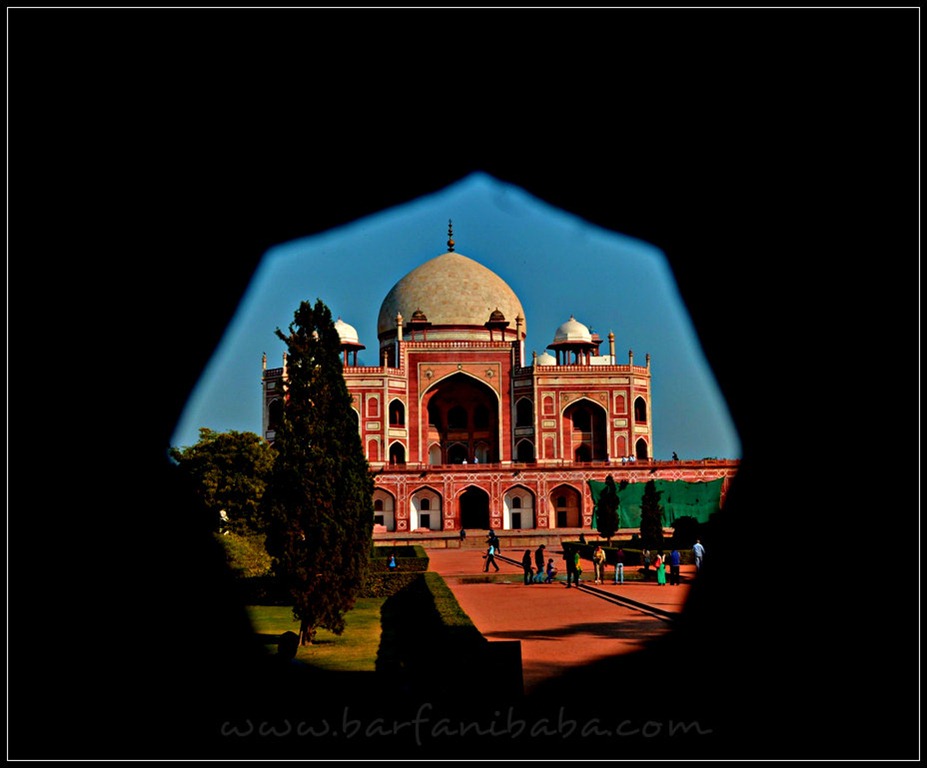
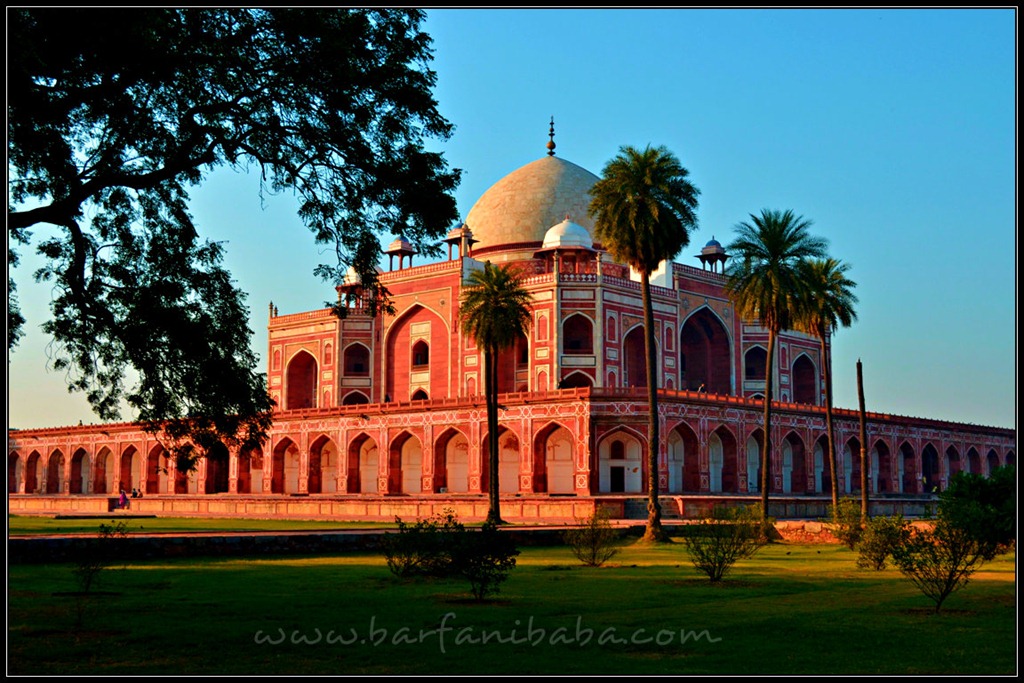
Located near the crossing of Mathura road and Lodhi road, this magnificent garden tomb is the first substantial example of Mughal architecture in India.

Humayun died in 1556, and his widow Hamida Banu Begam, also known as Haji Begam, commenced the construction of his tomb.

DSC_0037

Mirak Mirza Ghiyath, a Persian, was the architect employed by Haji Begam for this tomb.

Several rulers of the Mughal dynasty lie buried here. Bahadur Shah Zafar had taken refuge in this tomb with three princes during the first war of Independence (AD 1857).

DSC_0047

On the southwestern side of the tomb is located barber’s tomb (Nai-ka-Gumbad) which stands on a raised platform, reached by seven steps from the south.

DSC_0043

DSC_0051

DSC_0056

DSC_0057

DSC_0121

DSC_0242

DSC_0266

India Gate

ig India Gate by bArfaNibAbA
                                                                   India Gate, a photo by bArfaNibAbA on Flickr.

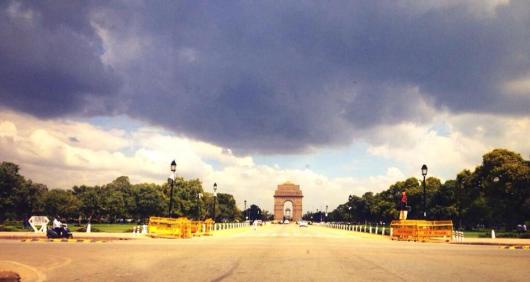
The India Gate is the national monument of India. Situated in the heart of New Delhi, it was designed by Sir Edwin Lutyens.

The monument is inspired by the Arc de Triomphe in Paris, which in turn is inspired by the Roman Arch of Titus. It was built in 1931. Originally known as the All India War Memorial, it is a prominent landmark in Delhi and commemorates the 90,000 soldiers of the British Indian Army who lost their lives in World War I and the Third Anglo-Afghan War. It is composed of red and pale sandstone and granite.

Originally, a statue of George V, Emperor of India stood under the now vacant canopy in front of the India Gate, but it was removed to Coronation Park together with a number of other British Raj-era statues. Following India’s independence, the India Gate became the site of the Indian Army’s Tomb of the Unknown Soldier, known as Amar Jawan Jyoti (“the flame of the immortal soldier”).

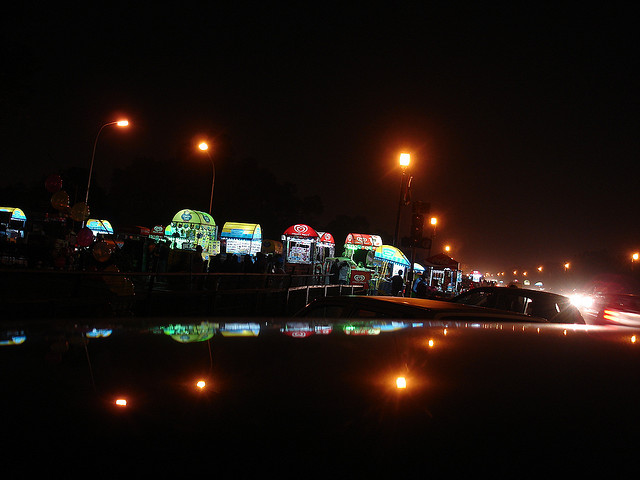
During night, India Gate is dramatically floodlit while the fountains nearby make a lovely display with coloured lights. India Gate stands at one end of Rajpath, and the area surrounding it is generally referred to as ‘India Gate

Another amazing fact about Delhi’s India Gate is that it is the country’s single largest point for selling ice-cream, closely followed by Chennai’s Marina Beach. India Gate is the place where ice cream companies create brand awareness. The biggest battle for market share in the country’s multi crores ice-cream business takes place at India Gate.

Cathedral Church of the Redemption

Surely the Lord is in this place..this is none other then the house of God.
The story of the Cathedral Church of the Redemption India revolves around its journey from an Englishman’s congregation to a multicultural one. In its diversity and its community work, the present Church has come to fulfil the founders’ vision of a common home, a meeting place for all sects and creeds. 
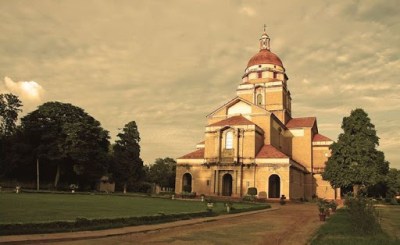
Tucked away from the bustle of New Delhi, in the quiet Church lane north of Jaipur Column and to the west of Parliament House at North Avenue, stands the Cathedral Church of the Redemption India. The Church’s centralized plan blends neatly with Sir Edwin Lutyens city plan. With Viceroy Lord Irwin’s keen support, the Church, built on Henry Alexander Medd?s (1892-1977) design, was opened for public worship on Sunday, 18 January 1931. H.A.N. Medd’s design was inspired by the Palladio Church of Il Redentore in Venice as well as Lutyens, Hampstead church. 
The Church, a witness to nearly eight decades of history, is a sanctuary of quiet meditation, prayer and generous giving. It is home to a vibrant parish and a wonderful tribute to Indian Christian life.
The linear plain exteriors of the church are in contrast with the high rounded arches inside. The spiritual aura of the church is enhanced by the light streaming through its crescent windows and a group of angels that look down from the curved roof above the altar. Regular mass takes place at the Cathedral Church of the Redemption on Sunday mornings. Apart from this, the cathedral also hosts religious concerts on festivals such as Christmas and Easter. It also maintains a personal choir, called the Capital City Minstrels. You can catch these concerts of choral music and carol singing on religious occasions and festivals

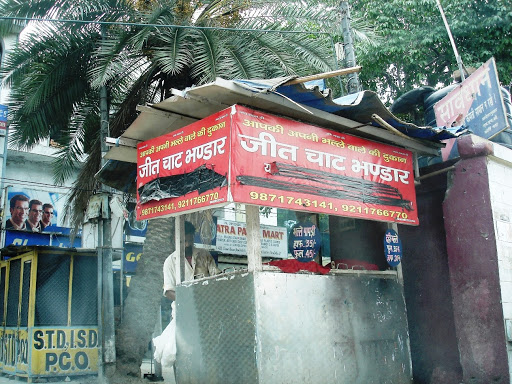
Jeet ke Bhalle – Raja Garden

Jeet ke Bhalle – I heard this name several time from my father. And during his lst visit to my house before his death he brought the same Dahi-Bhalle for me. So somehow I have bit emotional attachment with this shop.
This little shop at Raja Garden is surely leaving its reputation since last 40 years. At 35 bucks a plate, its more than enough of one full meal. Finding the place isn’t too hard. Its just close to Delhi metro pillar number 380 at Raja Garden.
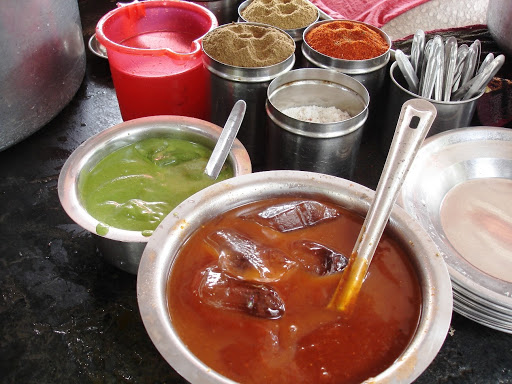
Dahi Bhallas which have been selling like hot cakes since the past 40 years. Soft, creamy and scrumptious and spicy with red south and green chatni. Masala can be as per your choice. These are a must-have for every foodie like me 🙂
Things changed, but not the taste of these Dahi-Bhalle which my father brought for me 4 years back.

Sultan Garhi – Country’s first tomb

DSC00082

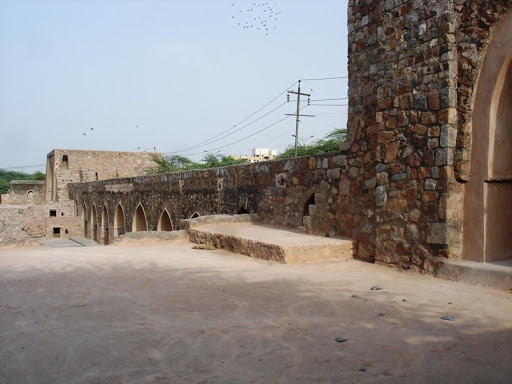
Country’s first tomb, Sultan Garhi built by Sultan Iltutmish in 1231 for his eldest son and Razia Sultana’s brother, Nasiruddin Mahmood, situated in the woodlands of Vasant Kunj [opposite Sector C, Pocket 9, Vasant Kunj in Delhi. At that time this place was known as Malkapur.

DSC00078    DSC00079

Iltumish was the first Sultan of the Slave Dynasty who ruled in Delhi from 1210 to 1236 A.D. The area where the Ghari (meaning: cave) tomb is situated, was part of the first city of medieval Delhi known as the  Slave Dynasty that ruled during the period 1206 to 1290

DSC00085 DSC00135

It is noteworthy that people of neighbouring areas of Mahipalpur and Rangpur consider it as the tomb of saintly ‘peer’ and come here for worship. It is a venerable place of worship and prayers for both Hindus and Muslims. For new brides of these villages it is almost a must to visit this place for worship.

DSC00086

DSC00089 DSC00127

DSC00111


Satpula :The Bridge of Seven Openings

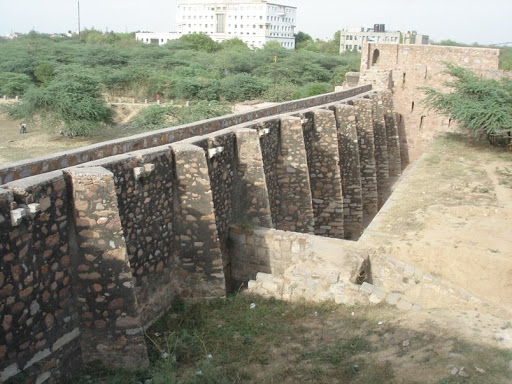
On the main Press Enclave Road near Khirki Village, their is a interesting 14th century waterworks known as Satpula (`Seven Bridges’).

Satpula, a weir about 65m high, was built by Mohammad bin Tughlaq in 1323. When Mohammad bin Tughlaq ascended the throne of Delhi, he built a new city for himself called Jahanpanah.

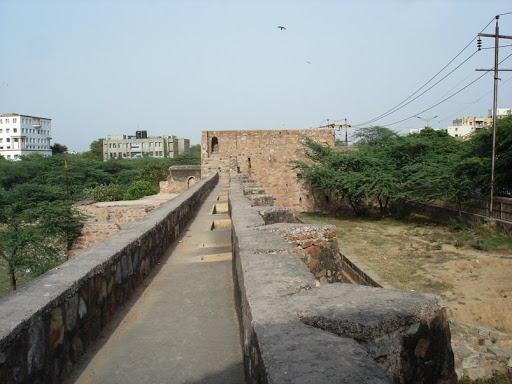
Satpula or the weir is an impressive example of the waterworks projects carried out under the Tughlaq dynasty.

Satpula consisted of a solidly built stone dam with seven wooden sluices  to regulate the flow of water from an artificial lake (filled with rainwater) to the fields outside the city.

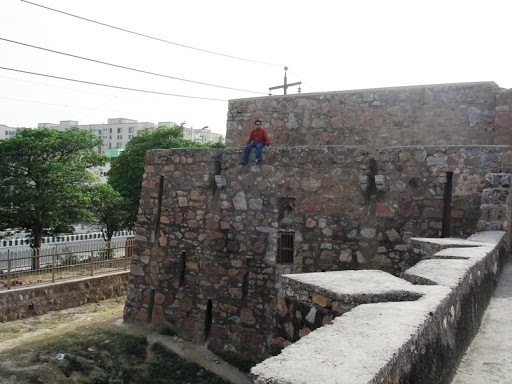
Satpula itself, with its solid walls and seven arched openings, has recently been restored by the Archaeological Survey of India. You can climb up onto the wide parapet and see the structure for yourself, but don’t expect anyone to guide you around—there isn’t likely to be anyone there. Satpula can be visited any time, and there isn’t any entry fee.