“And if you can’t see anything beautiful about yourself; get a better mirror, look a little closer, stare a little longer. because there’s something inside you that made you keep trying despite everyone who told you to quit. you built a cast around your broken heart, and signed it yourself you signed it : “they were wrong”
― Shane Koyczan
Shane L. Koyczan is a Canadian spoken word poet, writer, and member of the group Tons of Fun University. He is known for writing about issues like bullying, cancer, death, and eating disorders. He is most famous for the anti-bullying poem “To This Day” which has over 24 million views on YouTube.
“All these bad experiences that we go through, they don’t just disappear. We carry them our whole life trying to forget, escaping in habits, addictions, hate, toxic relationships. But what we don’t know is that by doing so we let them stay alive. We water them like withered flowers and we hang onto them to justify our mistakes and failures.”
– Asper Blurry
She is a writer, poet, thinker, seeker, traveler and much more. She often finds herself in places of different dimensions and cruel whispers, far from the dreamland. Do visit her Web site https://asperblurry.wordpress.com/
“Imagine all the people living life in peace. You may say that I’m a dreamer, but I’m not the only one. I hope someday you’ll join us and the world will be as one.”
– John Lennon
(9 October 1940 – 8 December 1980) was an English singer, songwriter and peace activist who gained worldwide fame as the founder, co-lead vocalist, and rhythm guitarist of the Beatles.
I have always believed, and I still believe, that whatever good or bad fortune may come our way we can always give it meaning and transform it into something of value.
– Hermann Hesse
(2 July 1877 – 9 August 1962) was a German-born Swiss poet, novelist, and painter. In 1946, he received the Nobel Prize in Literature.
A man who has gone out of his town comes back and finds that his house is on fire.
It was one of the most beautiful houses in the town, and the man loved the house the most. Many were ready to give double price for the house, but he had never agreed for any price and now it is just burning before his eyes.
And thousands of people have gathered, but nothing can be done, the fire has spread so far that even if you try to put it out, nothing will be saved. So he becomes very sad.
His son comes running and whispers something in his ear:
“Don’t be worried. I sold it yesterday and at a very good price ― three times.
The offer was so good I could not wait for you. Forgive me.”
Father said, “thank God, it’s not ours now!” Then the father is relaxed and became a silent watcher, just like 1000s of other watchers.
Please think about it!
Just a moment before he was not a watcher, he was attached.
It is the same house….the same fire…. everything is the same…but now he is not concerned. In fact started enjoying it just as everybody else in the crowd.
Then the second son comes running, and he says to the father, “What are you doing? You are smiling ― and the house is on fire?” The father said, “Don’t you know, your brother has sold it.”
He said, “We have taken only advance amount, not settled fully. I doubt now that the man is going to purchase it now.”
Again, everything changes!!
Tears which had disappeared, have come back to the father’s eyes, his smile is no more there, his heart is beating fast. The ‘watcher’ is gone. He is again attached.
And then the third son comes, and he says, “That man is a man of his word. I have just come from him. He said, ‘It doesn’t matter whether the house is burnt or not, it is mine. And I am going to pay the price that I have settled for. Neither you knew, nor I knew that the house would catch on fire.'”
Again the joy is back and family became ‘watchers’! The attachment is no more there.
Actually nothing is changing!
Just the feeling that “I am the owner! I am not the owner of the house!” makes the whole difference.
The Moral
This simple methodology of watching the mind, That you have nothing to do with it.
Everything starts with a Thought!
Most of the thoughts are not yours but from your parents, your teachers, your friends, the books, the movies, the television, the newspapers.
Just count how many thoughts are your own, and you will be surprised that not a single thought is your own. All are from other sources, all are borrowed ― either dumped by others on you, or foolishly dumped by yourself upon yourself, but nothing is yours.
Once Gautam Buddha was traveling from a village. Everyone was happy to see him and heard his speeches with lots of dedication. However, one young man was not at all happy to see him in the village. He believed Buddha to be a fake master fooling the masses.
“Holding on to anger is like grasping a hot coal with the intent of throwing it at someone else; you are the one who gets burned.”
While Buddha was delivering his speech, the man stood and started shouting in a very rude manner. Buddha did not pay any attention to him and continued speaking without bothering about him. This made the young man angrier.
He came in front of Buddha and facing him, he began insulting, “You have no right to teach anything to others. You are as stupid as everyone else. Stop fooling everyone. You are fake.!!”
The followers of Buddha tried to overpower that man. But Buddha stopped them and said, “It is not always necessary to counter aggression by aggression.”
Then he turned to the young man with a smile and asked, “Tell me, if you buy a gift for someone, and that person does not take it, to whom does the gift belong?”
The young man was surprised to be asked such a strange question and answered, “It would belong to me, because I bought the gift.”
The Buddha smiled and said, “That is correct. And it is exactly the same as your anger.
If you become angry with me and I do not feel insulted, then the anger falls back on you. You are then the only one who becomes unhappy, not me. All you have done is hurt yourself.”
The man understood the message and he felt embarrassed.
Eight-year-old Gillian was not doing well in school. The fidgety girl underperformed in tests, had trouble writing legibly and continually missed assignment deadlines. She could also be a disruptive presence in class. Sometimes she would be so inattentive that it was as if she wasn’t really there.
She probably had a learning disorder and needed to change schools, moving to one that catered for kids with special needs. At least, this was the thinking that Gillian’s current school outlined in a letter sent to her parents. Gillian herself didn’t understand what all the fuss was about. She was just a regular child, albeit a restless one.
But her mother and father were anxious about her educational prospects. This happened in the 1930s, long before Attention Deficit Hyperactivity Disorder (ADHD) became a catchphrase to explain children’s behavioural issues. There were also no options of medicating Gillian into obedience. Instead, a psychological assessment seemed to be the best course of action. Upon entering the psychologist’s intimidatingly formal oak-panelled office, Gillian fell into a big leather chair and tried not to squirm too much. The psychologist, who stared unnervingly at Gillian the whole time, questioned her mother at length. Eventually, the doctor came over to the girl and said that he and her mother needed to step outside for a few minutes. Before leaving, he turned on a radio that sat on his desk.
The psychologist took Gillian’s mother into the corridor, where they both stood at a window that allowed them to look into the office discreetly. The doctor said they were just going to watch the girl for a few minutes. As the adults looked on, Gillian got up from the chair and started dancing gracefully around the room, moving in time to the music from the radio, a look of bliss lighting up her face. The psychologist turned to Gillian’s mother and told her that there was nothing wrong with her daughter—she just wanted to dance.
He was right. When Gillian walked into her first dance class soon afterwards, she found herself surrounded by kindred spirits—people who, like her, loved being in motion. She worked hard in class and practised at home.
She was eventually accepted into London’s Royal Ballet School. Four decades later, after many successes as a performer and choreographer, she choreographed Cats and The Phantom of the Opera, two of the most successful musicals ever staged. Had Gillian been deemed a problem child, she may never have found her calling. But because she was encouraged to be herself, she experienced a lifetime of joy.
Gillian Lynne at the Olivier Awards in 2013.
Photos & information credit : Google and Wikipedia.
Two MONKS were walking from their monastery to another one nearby. One was an old wise monk and the other was a novice, an apprentice monk. As they walked in silence, they came across a river. Unseasonal rains had caused the river to run high. On the banks of the river was a young lady in a kimono, not sure whether it was safe for her to cross. When she saw the two monks, she looked relived and asked for help.
The young monk was aghast. He exclaimed, ‘Don’t you see that I am a monk? I took a vow of chastity.’ ‘I require nothing from you that could impede your vow, but simply a little help to cross the river,’ the young woman replied with a smile. ‘I will not . . . I can . . . do nothing for you,’ said the embarrassed young monk.
At this point, the elderly monk stepped forward and said, ‘Climb on to my back and I’ll help you cross.’ Upon reaching the other side, the old monk put the lady down. She thanked him and he responded with a ‘welcome’. With that, he started walking towards his destination.
The young apprentice was agitated. ‘How could you do this? This is against our order. You are supposed to be my mentor. You are supposed to show me the way. When we return, I am going to ask them to change my mentor.’
The young monk went on and on till they reached the next monastery.
On reaching the gate, the old monk paused, looked at the young monk and said, ‘I did carry the lady, but I put her down on the banks of the river. It seems like you are still carrying her.’
The empathy of the old monk to put the needs of the maiden before his own spiritual practice, and his spiritual ability to then let go of the fact that he had strayed from the path of his spiritual commitment, without feeling guilty, is a lesson for all of us.
We mustn’t allow our past actions to affect our current life, because letting go of the past is necessary to truly thrive our future.
― Shane Koyczan


 – Asper Blurry
 – Bob Marley
 – John Lennon
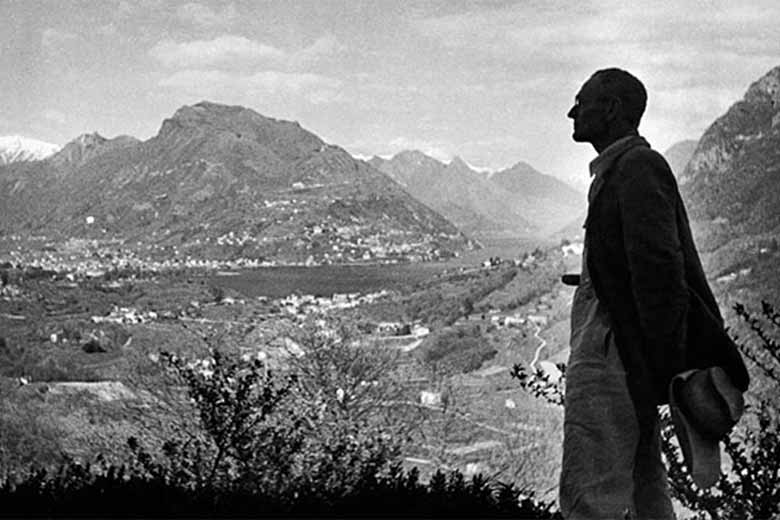 – Hermann Hesse




 bArfaNi bAbA