I’ve lost so many battles than I can even remember. What I never knew, though, was that I was actually stronger than I thought I was. I enjoyed the fight of survival.

I’ve lost so many battles than I can even remember. What I never knew, though, was that I was actually stronger than I thought I was. I enjoyed the fight of survival.

Teacher addresses a student and asks: “How many kidneys do we have?”
“Four!”, The student responds.
“Four? Haha,” The teacher was one of those who took pleasure in picking on his students’ mistakes and demoralizing them.
“Bring a bundle of grass, because we have an ass in the room,” the teacher orders a front bencher.
“And for me a coffee!”, the student added.
The teacher was furious and expelled the student from the room.
The student was, by the way, the Brazilian humorist Aparicio Torelly Aporelly (1895-1971), better known as the “Baron de Itararé”.
On his way out of the classroom, the student still had the audacity to correct the furious teacher:
“You asked me how many kidneys‘ we have. ” ‘We have four: two of mine and two of yours. ‘We have’ is an expression used for the plural. Enjoy the grass”.
Life demands much more understanding than knowledge. Sometimes people, because they have a little more knowledge or ‘believe’ that they have it, feel they have the right to underestimate others..

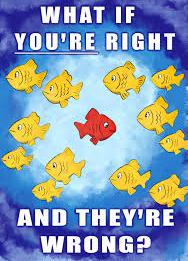
“And if you can’t see anything beautiful about yourself;
get a better mirror,
look a little closer,
stare a little longer.
because there’s something inside you
that made you keep trying
despite everyone who told you to quit.
you built a cast around your broken heart,
and signed it yourself
you signed it :
“they were wrong”Shane L. Koyczan is a Canadian spoken word poet, writer, and member of the group Tons of Fun University. He is known for writing about issues like bullying, cancer, death, and eating disorders. He is most famous for the anti-bullying poem “To This Day” which has over 24 million views on YouTube.
― Shane Koyczan

“All these bad experiences that we go through, they don’t just disappear. We carry them our whole life trying to forget, escaping in habits, addictions, hate, toxic relationships. But what we don’t know is that by doing so we let them stay alive. We water them like withered flowers and we hang onto them to justify our mistakes and failures.”
She is a writer, poet, thinker, seeker, traveler and much more. She often finds herself in places of different dimensions and cruel whispers, far from the dreamland. Do visit her Web site https://asperblurry.wordpress.com/
– Asper Blurry

The greatness of a man is not in how much wealth he acquires, but in his integrity and his ability to affect those around him positively.
(6 February 1945 – 11 May 1981) was a Jamaican singer, songwriter, and musician. Considered one of the pioneers of reggae.
– Bob Marley

“Imagine all the people living life in peace. You may say that I’m a dreamer, but I’m not the only one. I hope someday you’ll join us and the world will be as one.”
(9 October 1940 – 8 December 1980) was an English singer, songwriter and peace activist who gained worldwide fame as the founder, co-lead vocalist, and rhythm guitarist of the Beatles.
– John Lennon

I have always believed, and I still believe, that whatever good or bad fortune may come our way we can always give it meaning and transform it into something of value.
(2 July 1877 – 9 August 1962) was a German-born Swiss poet, novelist, and painter. In 1946, he received the Nobel Prize in Literature.
– Hermann Hesse

Two MONKS were walking from their monastery to another one nearby. One was an old wise monk and the other was a novice, an apprentice monk. As they walked in silence, they came across a river. Unseasonal rains had caused the river to run high. On the banks of the river was a young lady in a kimono, not sure whether it was safe for her to cross. When she saw the two monks, she looked relived and asked for help.
The young monk was aghast. He exclaimed, ‘Don’t you see that I am a monk? I took a vow of chastity.’ ‘I require nothing from you that could impede your vow, but simply a little help to cross the river,’ the young woman replied with a smile. ‘I will not . . . I can . . . do nothing for you,’ said the embarrassed young monk.
At this point, the elderly monk stepped forward and said, ‘Climb on to my back and I’ll help you cross.’ Upon reaching the other side, the old monk put the lady down. She thanked him and he responded with a ‘welcome’. With that, he started walking towards his destination.
The young apprentice was agitated. ‘How could you do this? This is against our order. You are supposed to be my mentor. You are supposed to show me the way. When we return, I am going to ask them to change my mentor.’
The young monk went on and on till they reached the next monastery.
On reaching the gate, the old monk paused, looked at the young monk and said, ‘I did carry the lady, but I put her down on the banks of the river. It seems like you are still carrying her.’
The empathy of the old monk to put the needs of the maiden before his own spiritual practice, and his spiritual ability to then let go of the fact that he had strayed from the path of his spiritual commitment, without feeling guilty, is a lesson for all of us.
We mustn’t allow our past actions to affect our current life, because letting go of the past is necessary to truly thrive our future.

 bArfaNi bAbA